


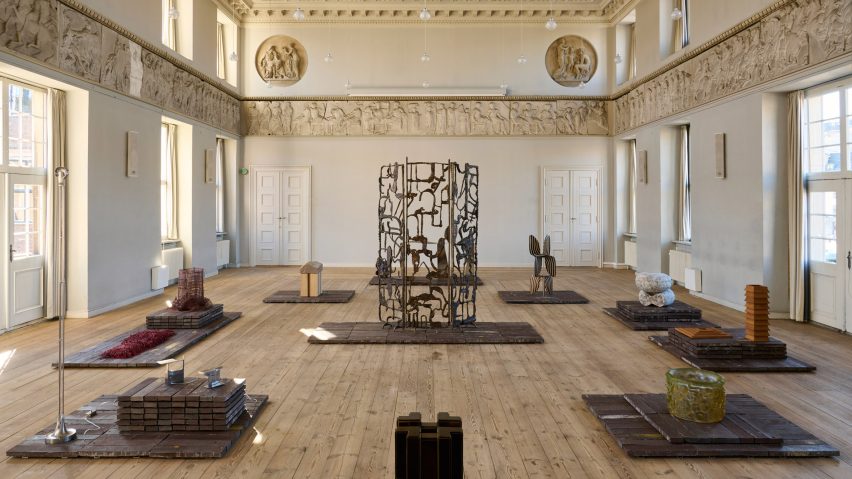
The latest edition of Danish design initiative The Mindcraft Project, curated by Christian + Jade, features pieces ranging from a pedestal constructed out of leftover shipping industry steel to a pagoda-like sculpture made from wooden trays.
This year's edition of the annual exhibition, which launched in 2008 to showcase Danish design, is currently taking place in the historic Charlottenborg Palace in central Copenhagen.
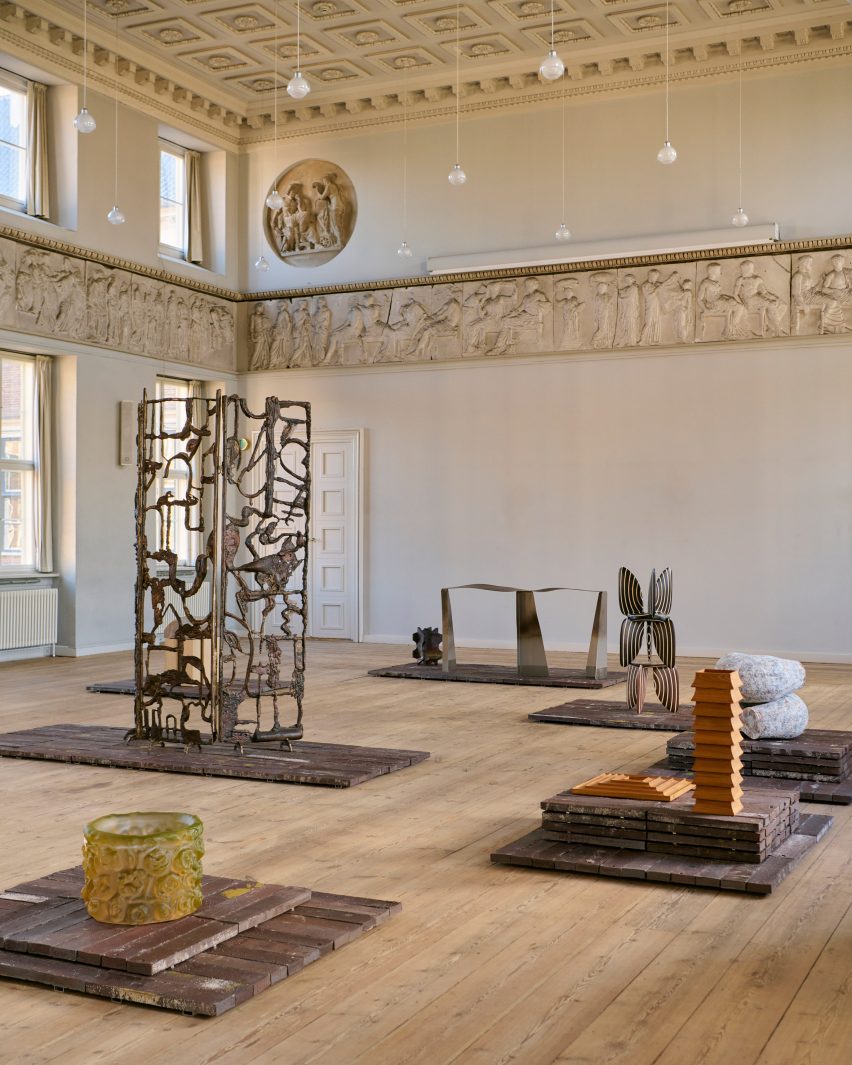
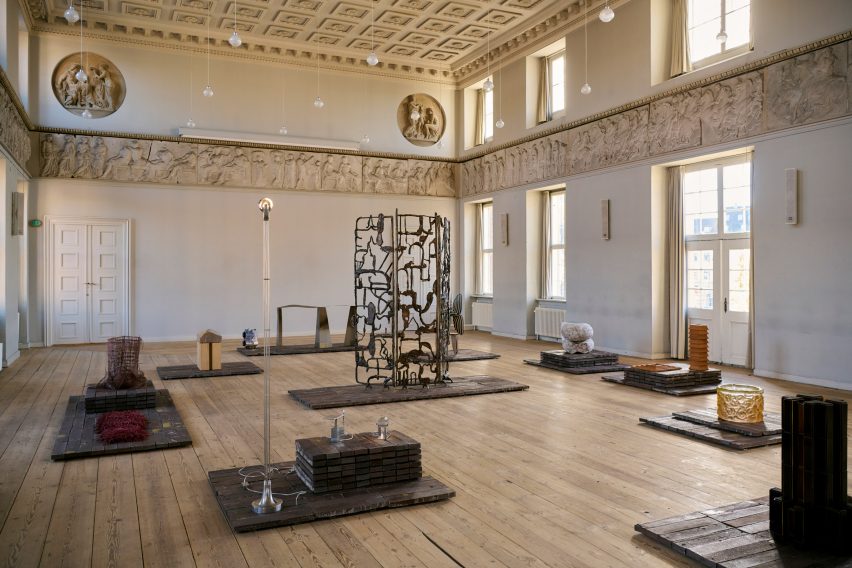
Here, curators Christian Hammer Juhl and Jade Chan of Christian + Jade have displayed works by ten Denmark-based designers in a fresco-covered room with a bare wooden floor that makes the pieces resemble artworks themselves.

While there are no specific parameters for which designers take part in The Mindcraft Project, the curators said that this year, it was quickly apparent that their picks all had something in common.
"We wanted to include designers at different stages of the career from different parts of Denmark, but also international designers who have been a part of shaping the Danish design scene," Chan told Dezeen.
"As our list grew, a very obvious red thread started to appear – there is a strong commitment to a special material or technique."

While Danish design is very well-known globally, the curators hope that The Mindcraft Project can help spotlight its less commercial side and give more of a focus on craft.
"We've always admired the platform and seen it as very important in Danish design culture because it gives a stage to more experimental and less commercially driven works," Juhl added.
"It gives a platform to people who are diving into craft and sort of lies in-between the craft and the design."
All the Mindcraft Project designers this year have a strong focus on their chosen material, with some choosing to show existing pieces and others creating entirely new work for this year's edition.
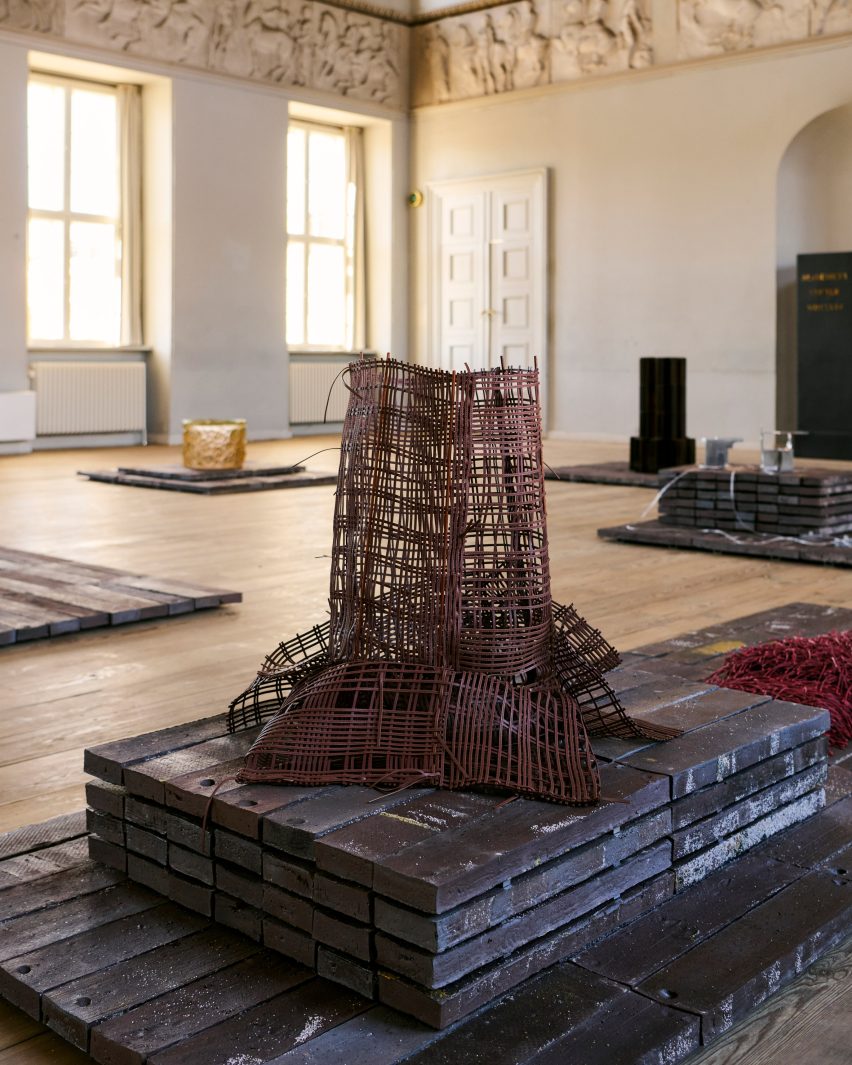
Among the latter were fashion designer Freya Dalsjø, whose Basket and Match Seat were painstakingly constructed from thin strands of leather, woven together to create a sculptural yet functional basket and seat or pillow.
"I was really honoured that they asked me; it's first and foremost an interior-focused exhibition, so it's super nice to be a part of it," Dalsjø told Dezeen.
"[Christian and Jade's] idea to ask me for these pieces was really good because the material worked – you can really see it in this context, in something other than fashion."
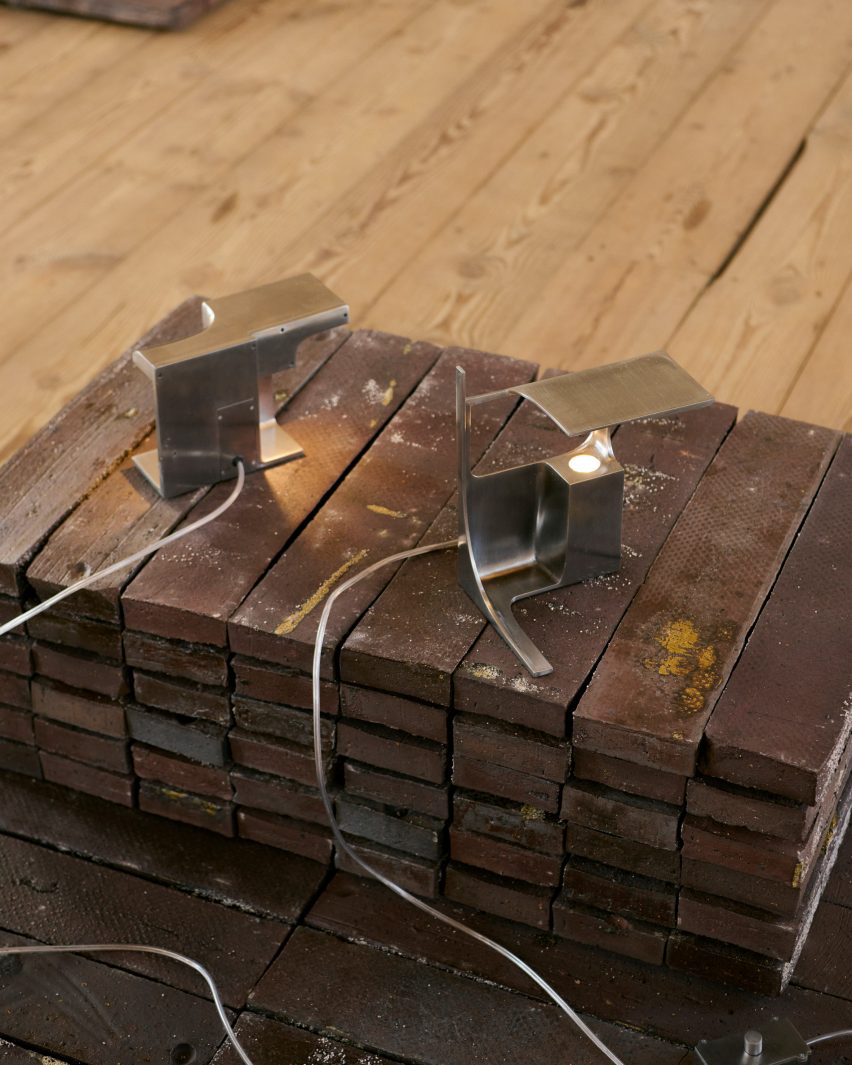
Designer Sigurd Nils Schelde also created new work for the exhibition, designing three pewter lamps that draw on architectural lighting.
"These works focus on different observations of architectural lighting from unfinished buildings; I was interested in how you see the light within a building," Schelde told Dezeen.
"It's like you're looking into the belly of the beast, and I was trying to adopt that into a more industrial language."
Schelde and Dalsjø's pieces are among some of this year's contributions that have a more polished, designed finish that clearly shows the work that went into refining the material, while other designers chose instead to highlight the raw materials.
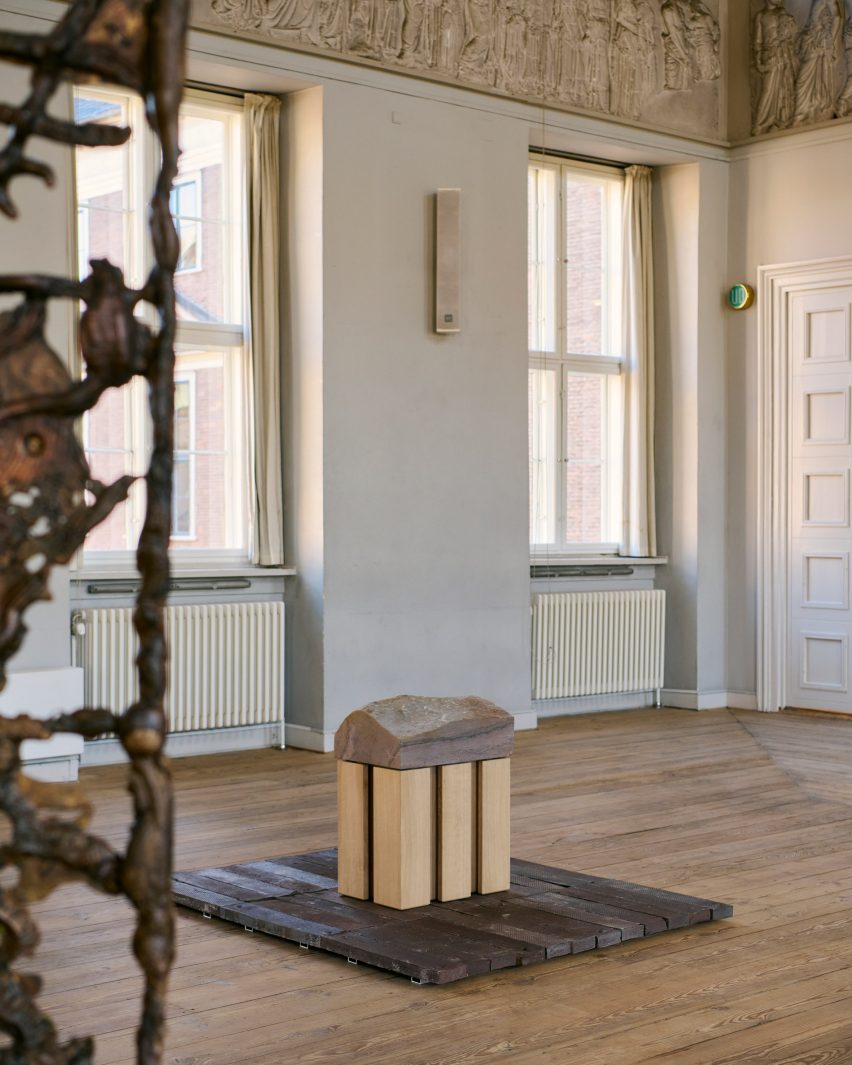
Among them was Hans Severin Jacobsen, whose Untitled sculpture was made from oak and quartzite that the designer sourced from a gravel pit next to his studio in Jutland.
Jacobsen placed a rough-hewn 90-kilogram stone from the pit on a sleek oak base, cutting and squaring the sides of the stone to give it its final shape.
"I usually work with found stones where I leave some or all of the stone untouched, but with this piece I've worked to impose geometry on this natural stone," he told Dezeen. "So this is man-made geometry."
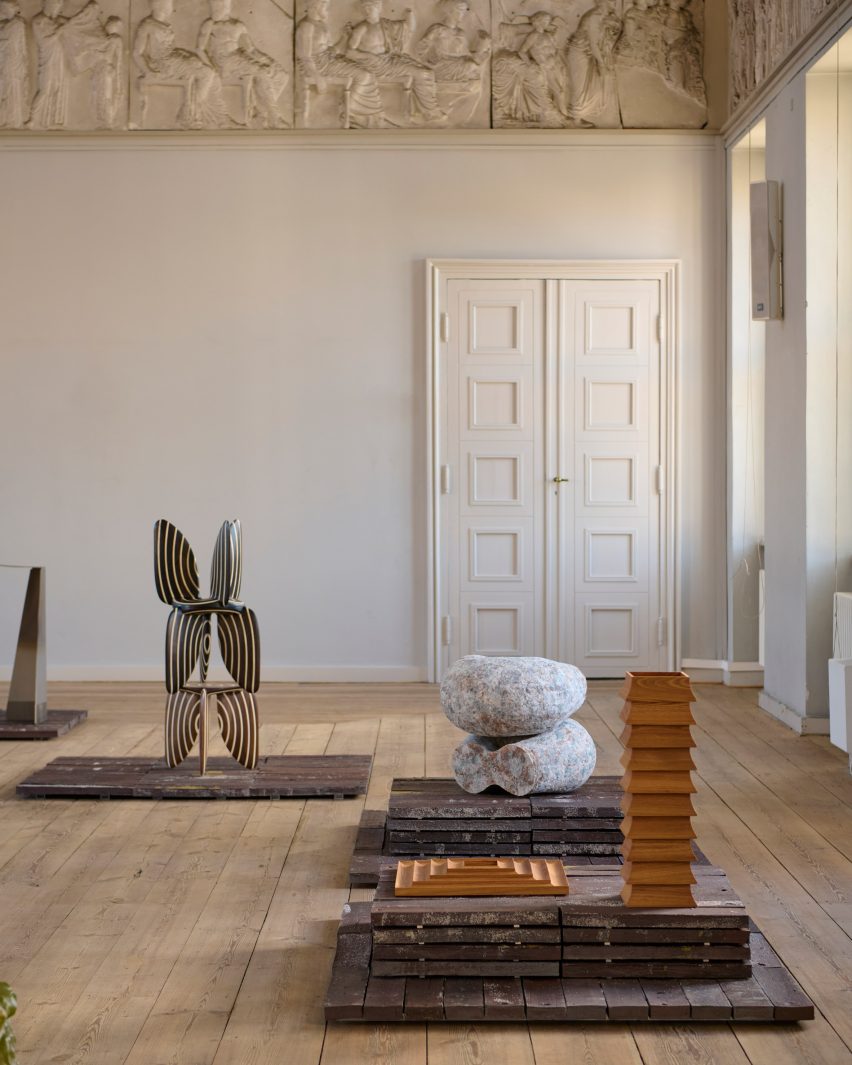
This focus on materiality was also evident in designer Daito Takefusa's piece Fragmented Signs (Double Touch B), which at first glance also appeared to be made from stone.
But the sculpture was made from ceramic, which Takefusa shaped with a rock to create its surface pattern before experimenting with different glazes, multiple layers of clay and oxides, to create an unusual, rough texture.
"What's interesting for me is the process of firing and coming up with the final product – it resembles archaeology," he told Dezeen.
"I cover [the clay] with a material that doesn't melt, and after the firing, I brush it off," Takefusa continued. "It's akin to archaeological research; I never know what it's going to look like after the firing."
The products in The Mindraft Project exhibition flank a central piece by FOS, a room divider made from cast bronze with an organic design pattern made using hand tools.

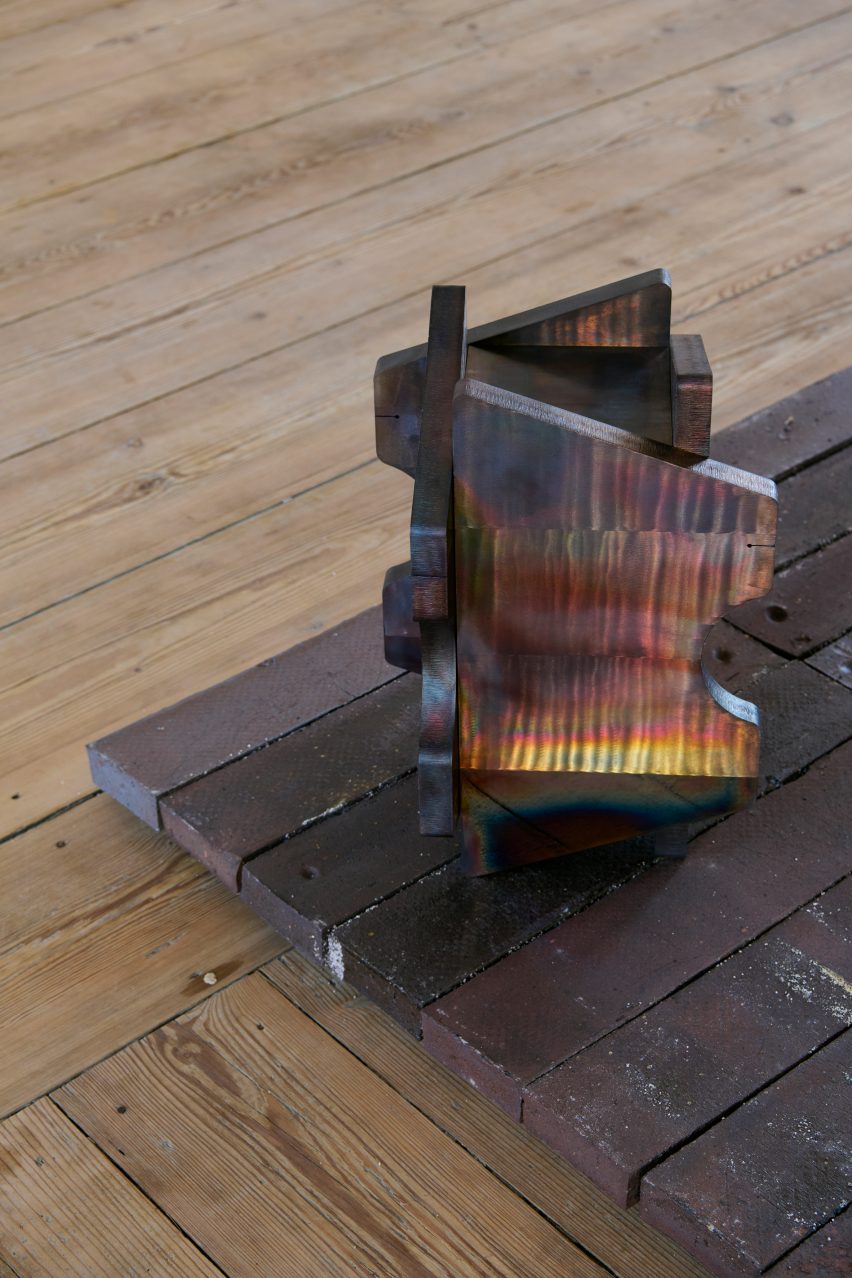
In contrast, designer Anton Hendrik Denys' console and pedestal were made from readymade, leftover stainless steel from the furniture and shipping industry, which he combined using his knowledge of creating custom-made pieces for art galleries.
"The small chunky piece [in the pedestal] was for a bar stool for a super yacht, where they just needed a very thin piece of chunky stainless steel, and these pieces were disregarded afterwards," he told Dezeen.
"I asked what they had left and how we could put that together, and then the shape and the thickness of the material defined the end result. I haven't changed the shape of the leftover pieces; I only put them together."
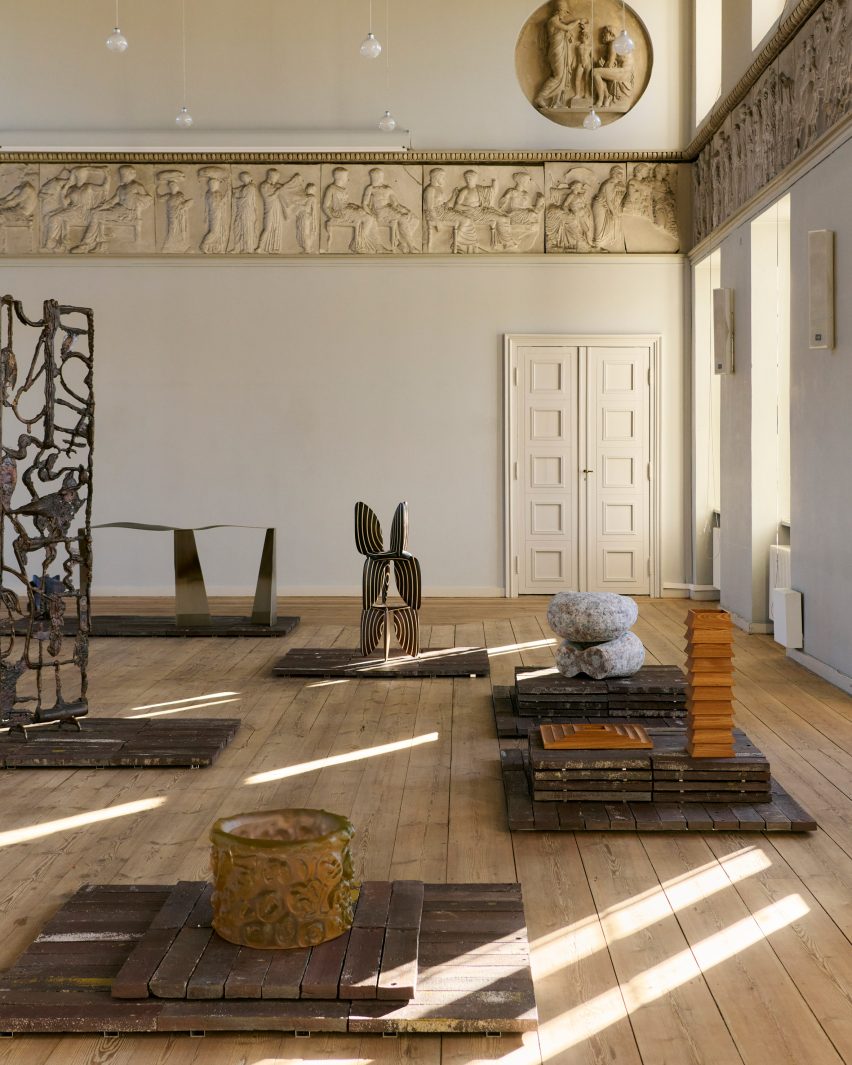
Another notable piece was made by Lene Bødker, whose The Well design took months to make.
Using glass that she melts in a kiln before shaping it through a lost wax casting process, Bødker came up with an end design that was inspired by the wells of Rome as well as the healing powers of nature.
"This specific work is called The Well," Bødker told Dezeen. "It has no bottom; you can imagine it goes deep, deep down into the ground, and you can pull up this magical, healing holy water."
Near Bødker's piece is another design with a focus on water, designer Thomas Woltmann's ceramic-clad water fountain Helligkilden that features beautifully glossy tiles dyed with natural ochres.
As well as metal, stone, glass and leather, The Mindcraft Project also presented works in wood, including designer Anna Søgaard's functional products made from elm.
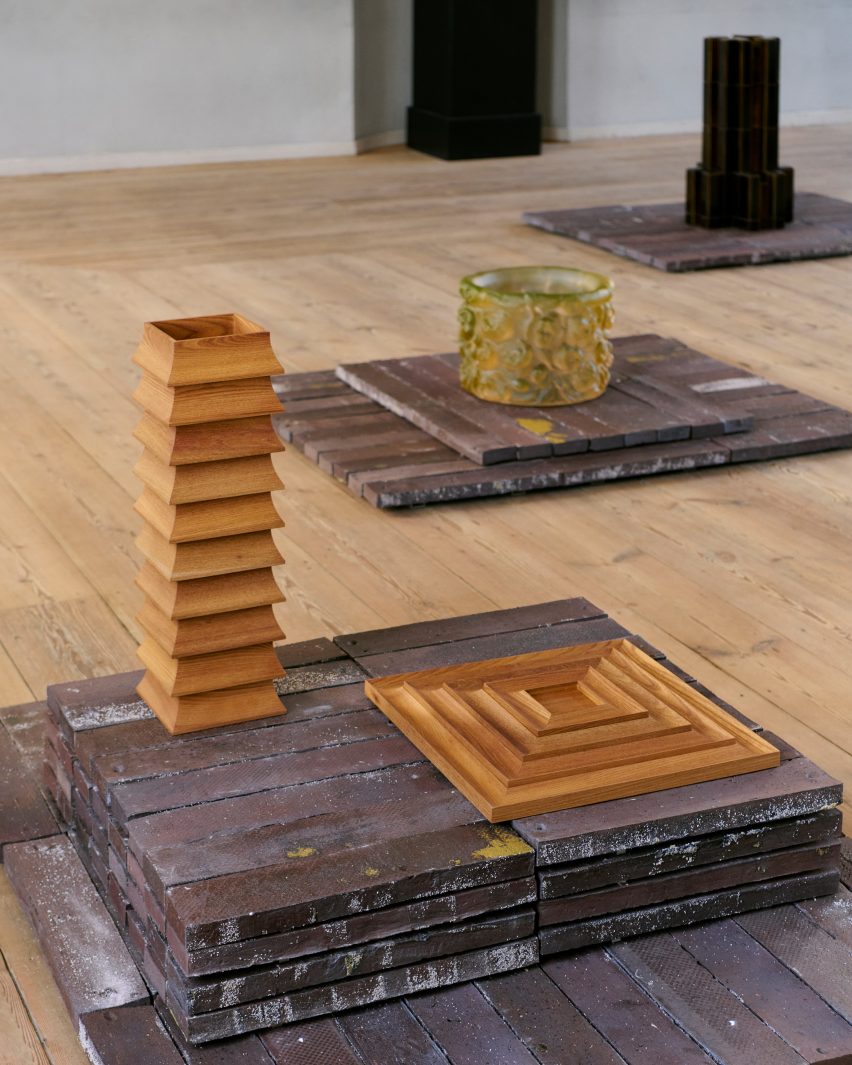
Her Curved Work, a set of trays and boxes, was made using a table saw to create a curved profile and then stacked to showcase their geometric shapes.
The boxes ended up resembling a pagoda, with the pattern of the grain showcasing Søgaard's attention to detail.
"I like boxes, storage that can contain things, but for me, it's about the sculptural way of working – I actually don't work with what you're putting inside, just the form of the box," she explained.
"It nearly looks like architecture, but this pagoda is actually just a single box and you can continue stacking it."
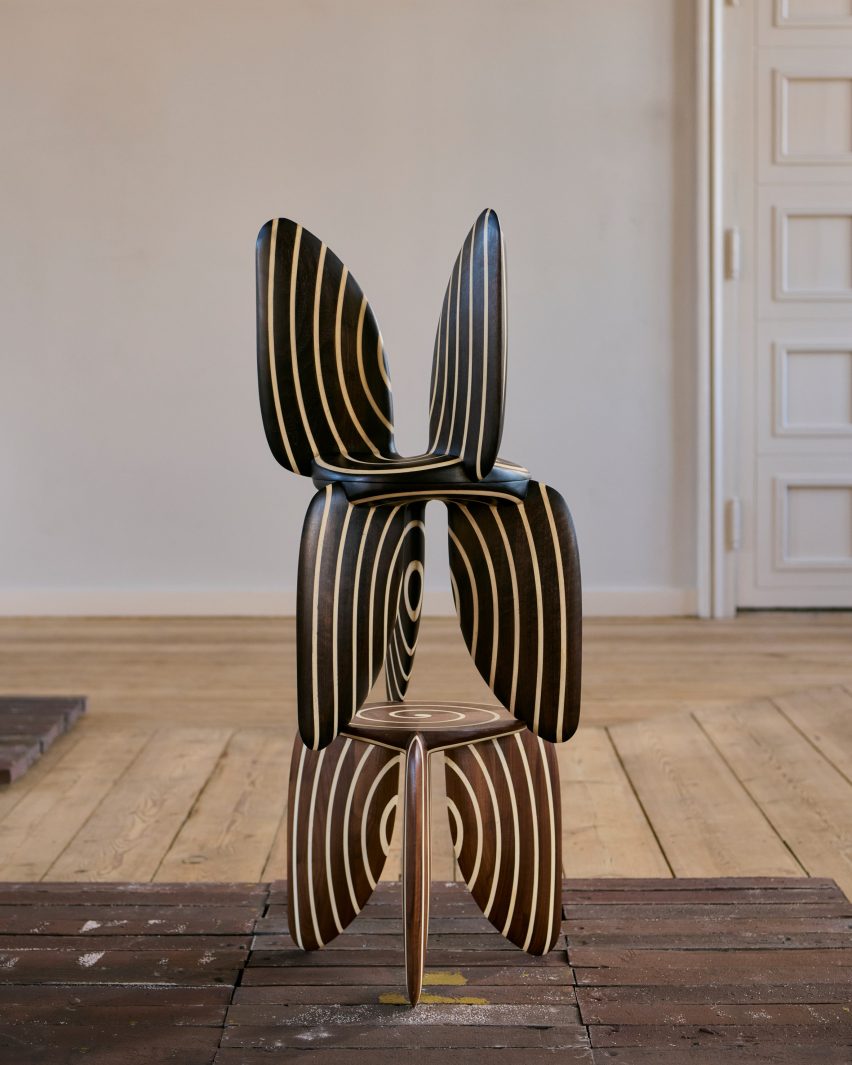
The final designer of this year's project, Nicholas Shurey, also worked with wood for his joyful Trio of Stools, Ziggy Pattern.
Partly inspired by designer Kansai Yamamoto's jumpsuit made for David Bowie, these sculptural seats bridge the gap between the sculptural and the functional, craft and design, neatly encompassing the theme of this year's exhibition.
Other recent design shows with a focus on materials include Hanging Baskets and One Tool One Stool at London Design Festival.
The photography is by Benjamin Lund.
The Mindcraft Project 2026 takes place at Charlottenborg Palace, Nyhavn 1, 1051 København K from 23 to 27 September. See Dezeen Events Guide for an up-to-date list of architecture and design events taking place around the world.