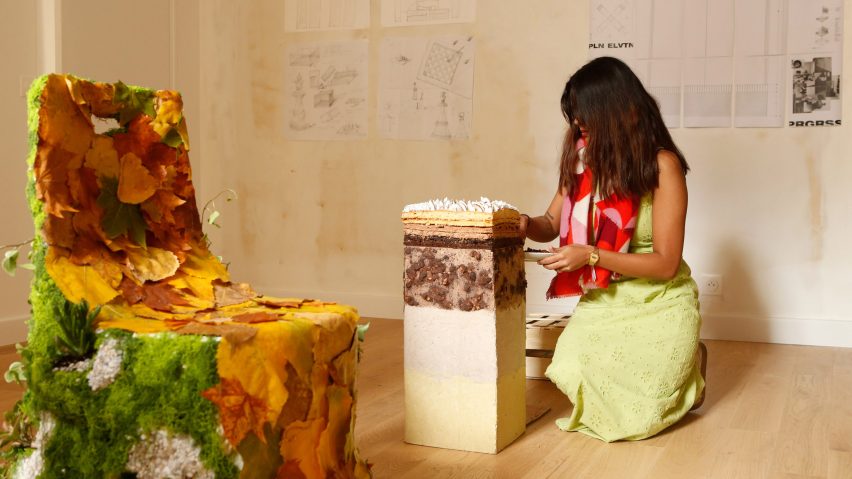
Speculative table design among conceptual projects from Paris School of Architecture
Dezeen School Shows: a project exploring a table's concept through experimental materials is among the projects from the Paris School of Architecture.
Also featured is a project exploring social, cultural and ecological themes within Paris' urban structure, and another examining how architecture can respond to the evolving digital age.
Paris School of Architecture
Institution: Paris School of Architecture
Course: Postgraduate Diploma in Advanced Architecture
Tutors: Martin Tubiana, Yasemin Sahiner, Luc Izri, Matthew Won Piker and John Bingham-Hall
School statement:
"Paris School of Architecture (PS-Arch) is an experimental and internationally oriented school of architecture based in central Paris. As a two-year postgraduate programme taught in English, it prepares graduates to operate across Europe and beyond.
"Recently awarded RIBA Part 2 Candidate Course status, PS-Arch occupies a distinctive position within the French and European landscape of architectural education, combining professional accreditation with an alternative model of architectural pedagogy.
"Founded in response to the changing conditions of contemporary architectural practice, PS-Arch places individual research at the centre of design education. Its research-led pedagogical model encourages students to critically engage with the social, political, environmental and technological challenges of the present.
"Through design, writing and representation, students question established assumptions and develop speculative propositions that operate between critical inquiry and architectural imagination.
"Moving beyond traditional instructional models, the school provides a framework for the development of each student's own intellectual and design agenda within a supportive network of practicing architects, designers, artists and researchers.
"The programme fosters independence, experimentation and rigorous debate, enabling students to define their own position within an increasingly complex disciplinary landscape.
"The projects presented in this year's exhibition address a broad range of contemporary questions through architecture and design. Engaging with the metropolis as a site of conflict, negotiation and transformation, they examine the visible and invisible forces that shape urban life.
"From questions of ecology and infrastructure to technology, governance and collective identity, the work reveals alternative readings of the city while proposing new forms of spatial, social and political imagination."
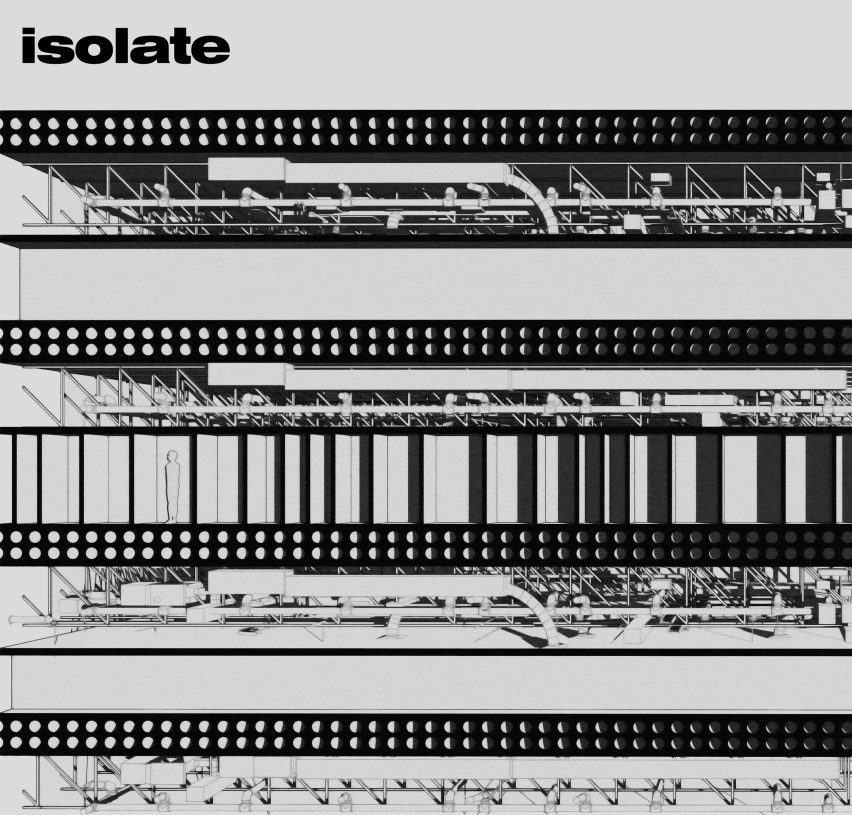
Default Systems, Inherited by Aaron Fenwick
"This project examines the contemporary city as an operational system shaped less by intentional urban design that prioritises lived human experience than by inherited logistical and governance protocols.
"In this dystopia, architecture increasingly functions as an execution layer for such protocols when authorship is delegated to automation. Reorganised around the efficiency of movement, housing and public life are reduced to modes of throughput rather than habitation and civic participation.
"Domestic space is therefore reformatted as logistical capacity: housing becomes human storage, circulation becomes governance, and the street shifts from civic ground to managed corridor.
"Through critical and speculative architectural drawings and infrastructural megastructures embedded within the existing city, the project amplifies contemporary urban tendencies to the point of satirical absurdity."
Student: Aaron Fenwick
Course: Integrated Research Project (Studio)
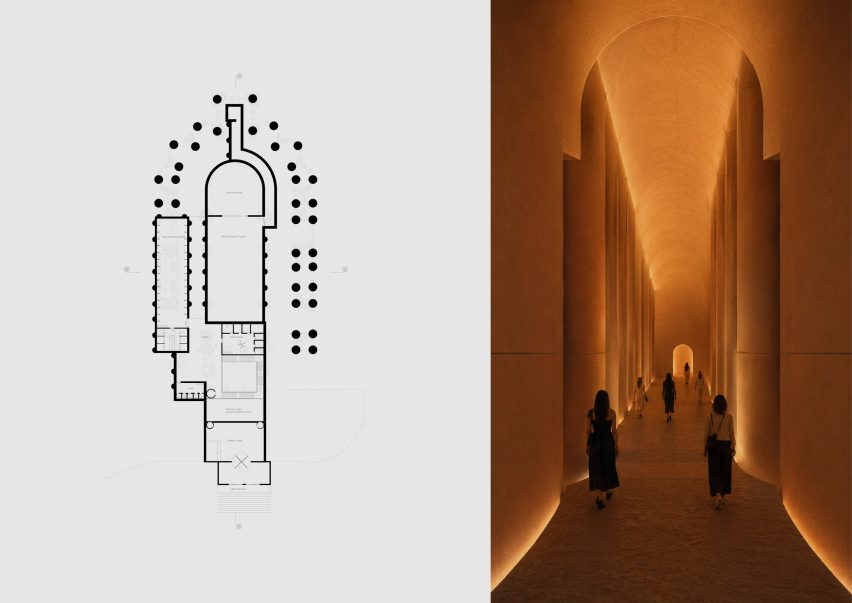
Cyclical Sanctuary by Garima Purohit
"Institutions have historically standardised space around continuous, uniform performance, built on a temporal logic misaligned with female biology.
"This project draws on a speculative ethnography of cyclical feminist communities emerging in response to two centuries of biomedical suppression and linear productivity culture, mapping four architecturally distinct environments onto the menstrual cycle to imagine spatial conditions that would support the menstruating body to return to its natural infradian rhythm.
"Through critical inhabitation, the proposal guides the Sacré-Cœur into the next stage of its history, converting it into a new spiritual sanctuary.
"Menstruation, follicular, ovulatory and luteal phases are translated into spatial atmospheres calibrated through acoustic thresholds, material texture, light intensity and social exposure, arguing that the erasure of cyclical knowledge was not only cultural or pharmaceutical, but built into the very walls we inhabit."
Student: Garima Purohit
Course: Integrated Research Project (Studio)
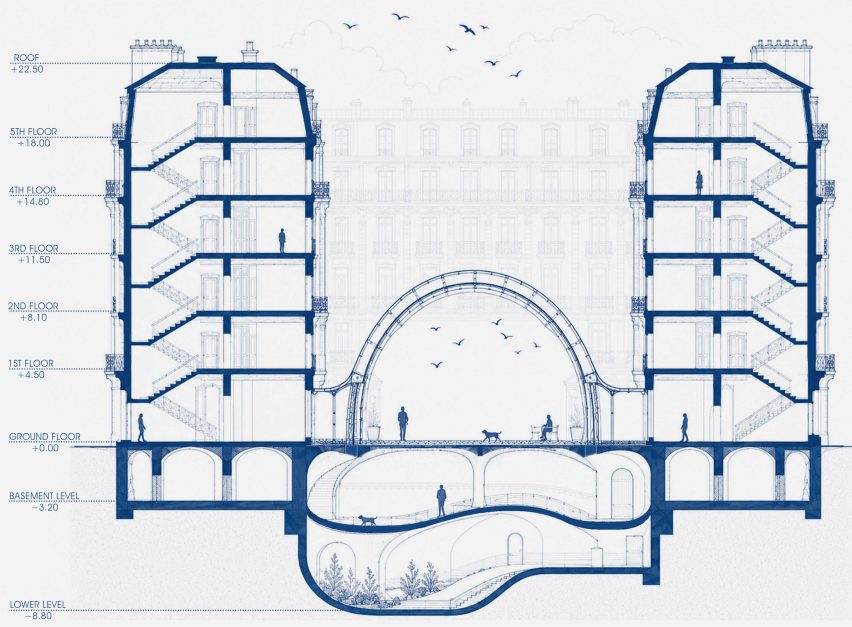
Firewall Architecture by Varvara Anisimova
"This speculative design project imagines a near future in which domestic life is no longer private, but continuously translated into data through phones, wearables, cameras, microphones and smart home systems. How might architecture respond to new conditions of exposure and offer digital shelter?
"Located within a dense Haussmannian block in Paris, the proposal implements a concealed interior network that passes through internal courtyards and residential buildings behind classical facades.
"Rather than rejecting technology, the project creates an architectural firewall where data can be idealised, distorted, masked or completely interrupted.
"Faraday caves, bird aviaries, dog corridors, water chambers and reflective surfaces form a new interior landscape where residents can regain control over their digital visibility."
Student: Varvara Anisimova
Course: Integrated Research Project (Studio)
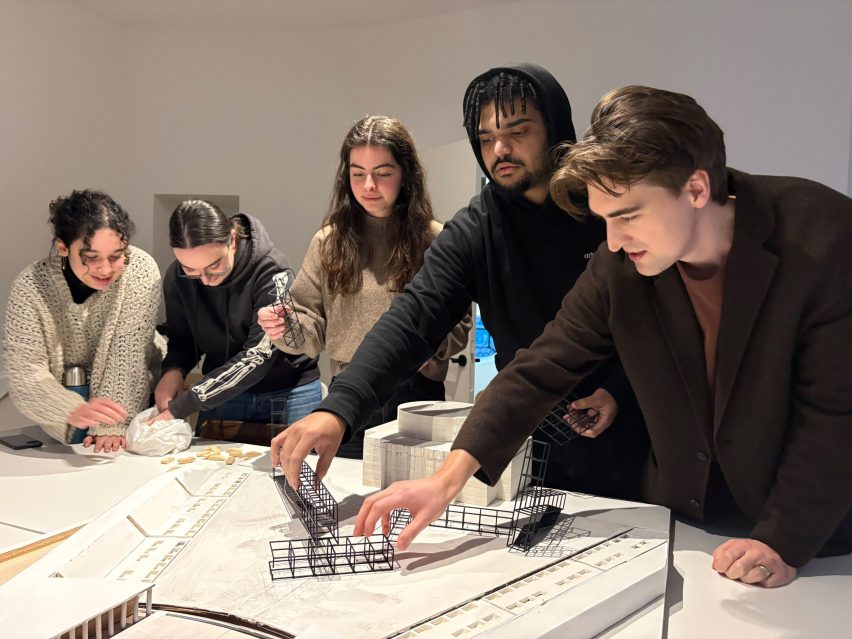
Urban Activator by Interior Architecture students
"This one-week intensive launched Term 2 and the architectural phase of students' Integrated Research Projects through a collaboration with ESAM Design School, welcoming around 30 interior architecture students to work in integrated teams.
"Students developed temporary cultural interventions for Place Stalingrad, a Parisian public space where infrastructure, water and civic life converge.
"Each proposal responded to a speculative narrative developed by PS-Arch students, resulting in projects ranging from a landscape that invited the cyclical tides of the canal into the square, to an experimental democratisation of luxury craftsmanship, a disruptive data-signal tower and a provocative car parking structure.
"Physical making was central to the process, with students extensively utilising the facilities of the WoMa FabLab to produce large-scale models and prototypes."
Students: Interior Architecture students
Course: Integrated Research Project (Workshop)
Tutors: Martin Tubiana and Andy Yu
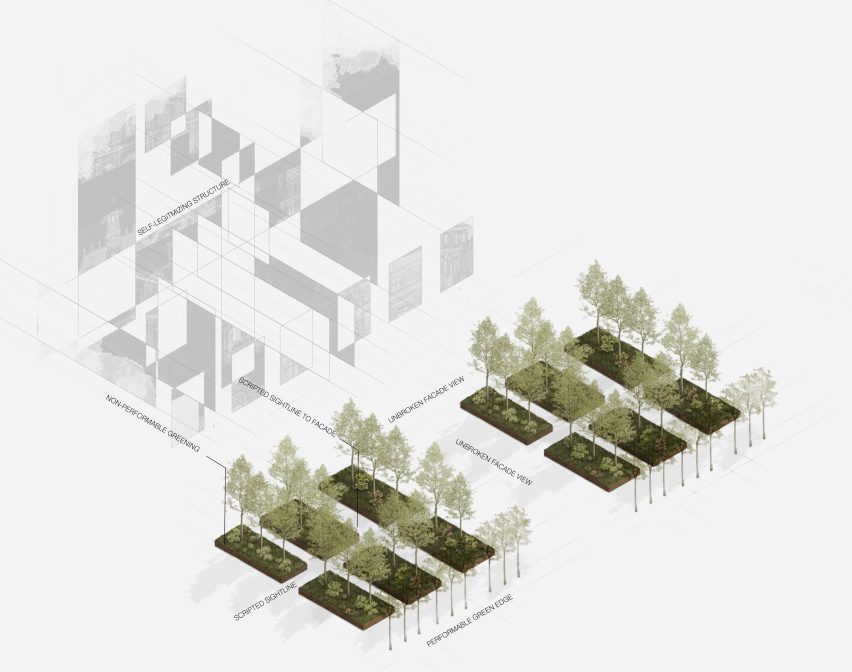
Bioclimatic Performance/Performing Bioclimaticism by Critical Inquiry students
"In the Critical Inquiry course, students investigated the social, cultural, ecological and political implications of Paris's new bioclimatic urban plan through an immersive programme of site-based research methods.
"Through a combination of walks, lectures, and fieldwork, they learned to read tensions, possibilities, and problems in the gap between bioclimatic design and the pluralistic practices of inhabitation in urban life by using sound recording, photography, film and observational writing as tools of rigorous inquiry.
"These methods encouraged students to develop original questions through direct engagement with the city itself, defining not only what they wanted to interrogate, but also what impact their research might have and for whom.
"The resulting projects combined written research with alternative media, producing distinctive investigations that contribute to contemporary debates on the design, governance and inhabitation of the city."
Students: Critical Inquiry students
Course: Critical Inquiry
Tutors: John Bingham-Hall and Eyub Acikgoz
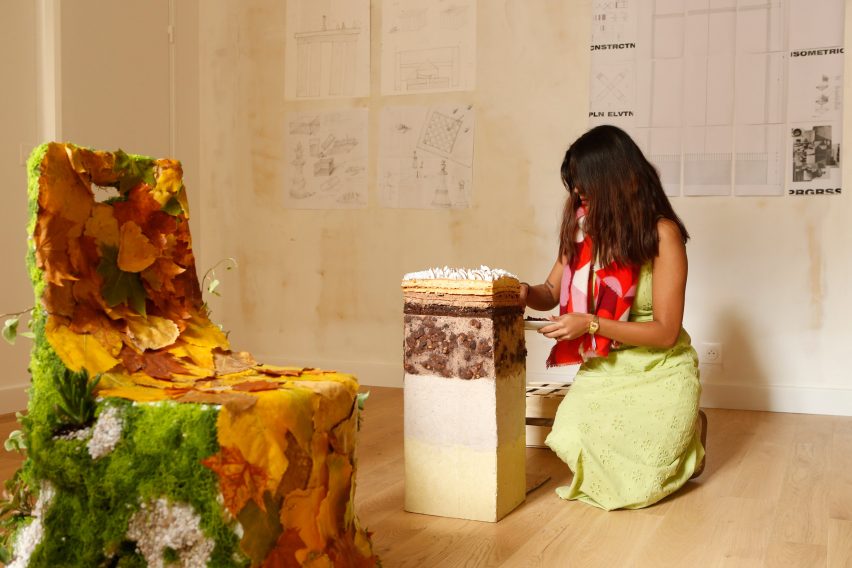
Arts de la Table by Integrated Research Project students
"In this two week intensive, students explored the studio theme, 'muilding', by developing speculative table settings that reimagined eating as a spatial, material, and cultural act; treating food not only as nourishment but also as a design material.
"Working within a 50 by 50 centimetre footprint, they translated emerging trends and research into performative installations including: a chess set of bread questioning surveillance and control, an eroding cake modelled on soil movement patterns and a satirical subscription meal service critiquing waste and sycophancy.
"Together, the works transformed consumption into a medium for architectural speculation and aesthetic exploration."
Students: Integrated Research Project students
Course: Integrated Research Project (Workshop)
Tutors: Clementine Debaere, Delaney Inamine, Eyub Acikgoz and Martin Tubiana
Partnership content
This school show is a partnership between Dezeen and Paris School of Architecture. Find out more about Dezeen partnership content here.