Dezeen Awards trophy updated using “one of humanity’s oldest natural materials”

Photography courtesy of Corticeira Amorim
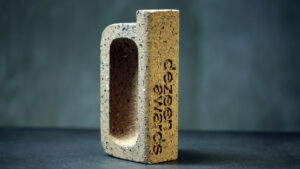
Portuguese manufacturer Corticeira Amorim has used sustainably harvested cork to refresh the latest edition of Dezeen’s iconic D-shaped trophy.
The trophies will be presented to this year’s winners at the Dezeen Awards party next week on 16 November at London’s Royal Opera House.
The event will bring together shortlisted studios, judges and the international architecture and design community to celebrate this year’s projects and reveal the 2026 winners, who will be the first to collect the new trophies.
Final tickets are available until 12pm London time on 11 November. Secure yours now.
An all-cork refresh for Dezeen Awards trophies
This year’s trophies have been produced in partnership with Corticeira Amorim, the world’s largest cork processing group, and mark the next material chapter for Dezeen’s trophy designs.
The updated design features an all-cork material palette that creates “a very direct encounter with the material”, according to Corticeira Amorim board member Cristina Amorim.
The group began by considering the trophy’s original design by Dutch studio Atelier NL, which was first created in 2018 and made from clay.
“The starting point was to preserve the recognisable form and graphic identity of the Dezeen Awards trophy, while allowing cork itself to become part of the design,” Amorim explained.
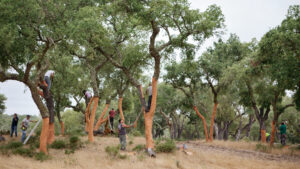
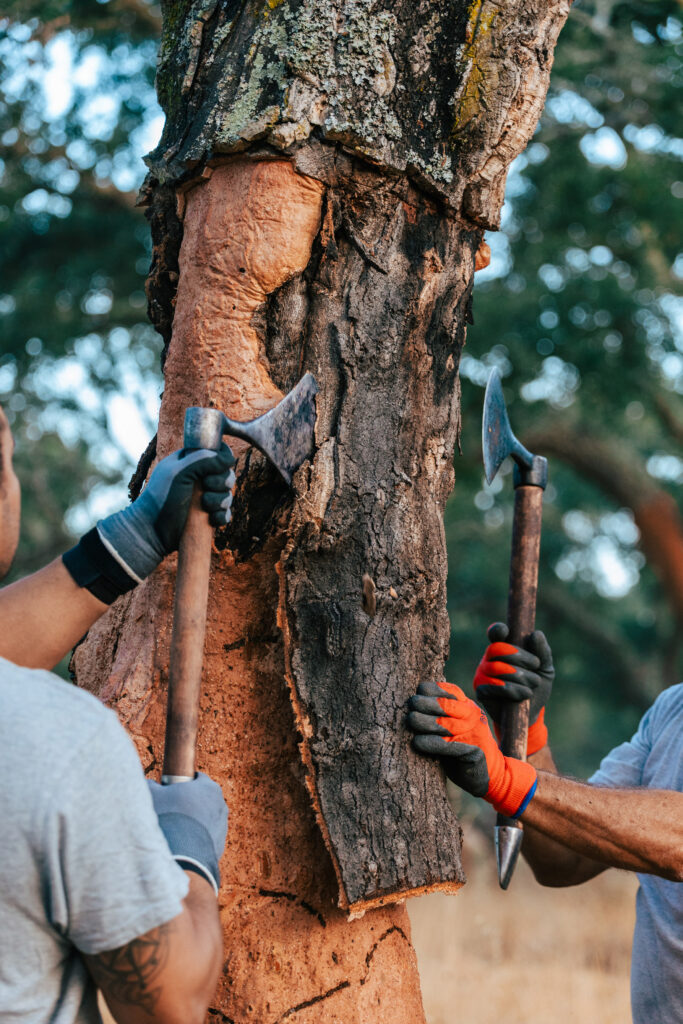
Cork is derived from the outer bark of the cork oak, which grows mainly in western Mediterranean countries such as Portugal, where Corticeira Amorim is based and has operated for over 150 years.
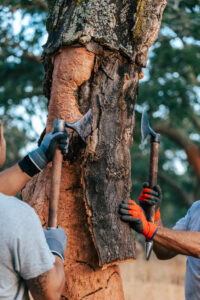
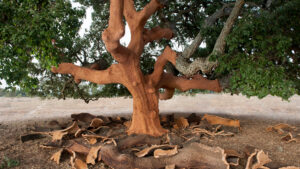
The material is renewable and recyclable. It is harvested without felling the tree, which naturally regenerates its bark to be harvested again at intervals of at least nine years.
Cork can also sequester carbon while replacing other, more polluting materials.
Beyond its sustainability credentials, the material is also remarkably light, resilient and adaptable in its nature.
“There is an interesting challenge in cork – it is one of humanity’s oldest natural materials, yet we are still discovering what it can do,” Amorim said.
This challenge spurred the development of different cork compositions, textures and finishes, after which a set of grains and colour references were selected to distinguish winner tiers while keeping a consistent visual language across the collection.
The winners of this year’s project categories, project of the year and Designers of the Year will each receive one of the bespoke cork trophies.
The project marks a continuation of Corticeira Amorim’s collaboration with architecture and design initiatives, revealing what Amorim sees as the “side of cork people may not expect”.
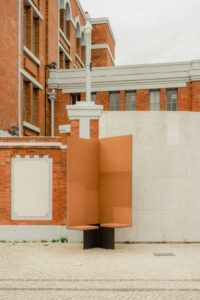
In 2024, the cork manufacturer produced the installations for City Cortex, a major arts programme that took place across the city of Lisbon.
The programme brought together internationally recognised architects and designers to create cork-based interventions for public and semi-public spaces, including Eduardo Souto de Moura, Diller Scofidio + Renfro and Yves Béhar.
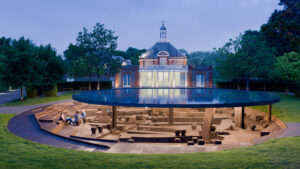
Other notable projects also include Herzog & de Meuron and Ai Weiwei’s sunken 2012 Serpentine Pavilion, as well as product collaborations with designers including Jasper Morrison, the Bouroullecs and Naoto Fukasawa, showcasing the material’s broad potential.
“What makes cork surprising is its versatility: the same natural material can be transformed in so many different ways – some of them still unconceived,” Amorim said.
Reflecting on this year’s trophies, Amorim said: “cork is not simply associated with the awards – it becomes part of the award itself.”
“What we like about the final result is its simplicity,” she continued.
“The shape belongs unmistakably to the Dezeen Awards, but the texture, warmth, grain and natural variation belong unmistakably to cork.”
Previous editions of the Dezeen Awards trophy have explored materials including a compound of micro-paper, wood from London street trees and clay used to make the traditional yellow bricks found in the UK’s capital.
Dezeen Awards 2026 in partnership with Trimble
Dezeen Awards is the ultimate accolade for architects and designers worldwide. The ninth edition of the annual awards is in partnership with global technology company Trimble. Through connected hardware and software solutions, Trimble helps designers to transform the way they shape spaces and buildings as well as drive productivity in the process. Trimble’s collaboration with Dezeen Awards demonstrates its ongoing commitment to inspiring and supporting creative excellence across the globe.
Photography courtesy of Corticeira Amorim
Read more
Recommended stories
Dezeen Awards 2024 sustainability longlist revealed
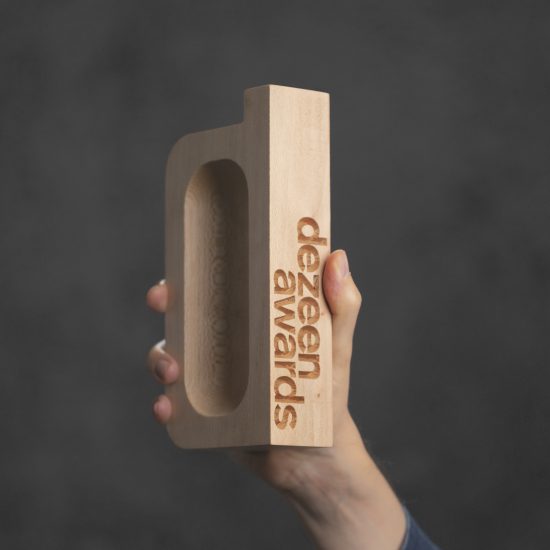
Dezeen Awards 2020 trophies by Atelier NL are crafted from wood salvaged from London trees
Dezeen Awards 2025 design shortlist reveals 79 leading projects
Dezeen Awards 2025 longlists reveal 192 of the year’s best designs
Dezeen Awards 2025 sustainability shortlist announced
Dezeen Awards 2025 sustainability longlist revealed
Architects and designers from around the world celebrate at Dezeen Awards 2023 party