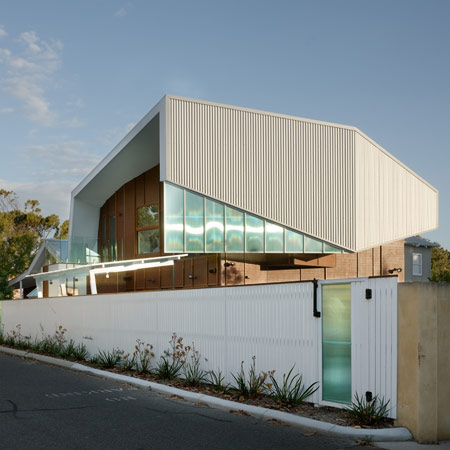
Swan Street Residence by Iredale Pedersen Hook
Australian practice Iredale Pedersen Hook Architects have completed the renovation and extension of a private home in Perth, Australia.
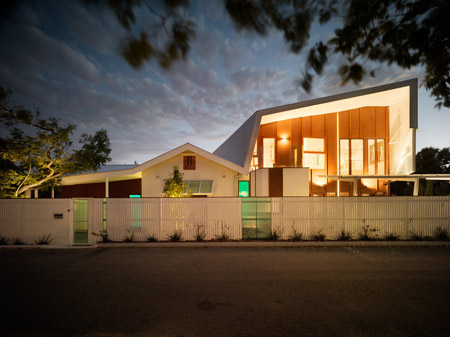
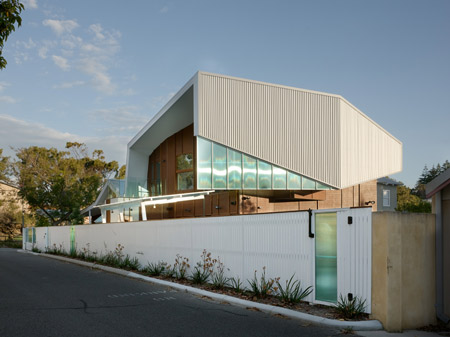
Called Swan Street Residence, the project reinterprets the original 2-storey structure in the suburbs of Perth, wrapping it in folding and unfolding layers to create new internal and external spaces.
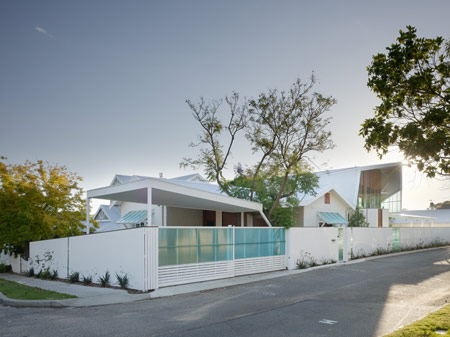
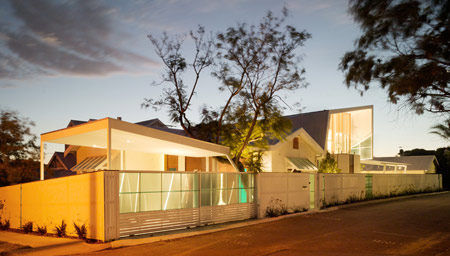
The architects’ brief was to create a sense of spaciousness with a small site, providing safe play areas for children.
The core of the building is constructed from timber, while the folding surfaces are made of corrugated metal and glass.
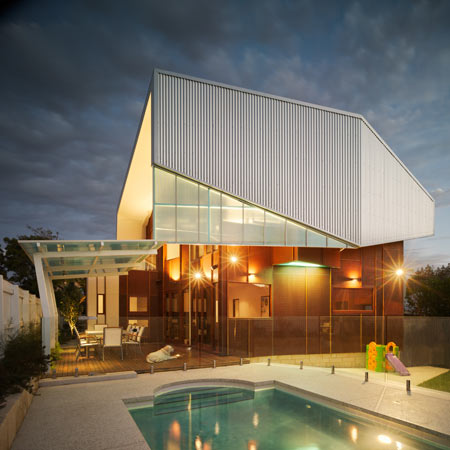
Wooden decking areas and a swimming pool fill the negative spaces of the plot.
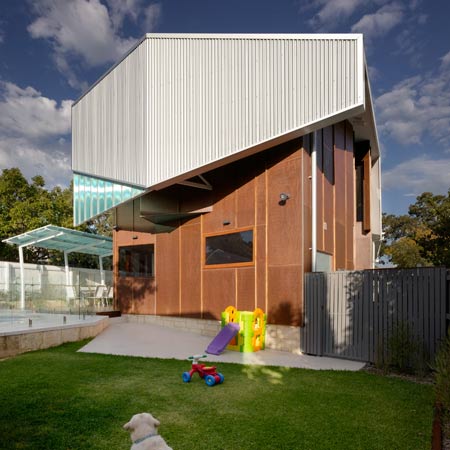
The architects aimed to explore the notion of time through their use of materials including weathered timber and copper that will oxidise over time.
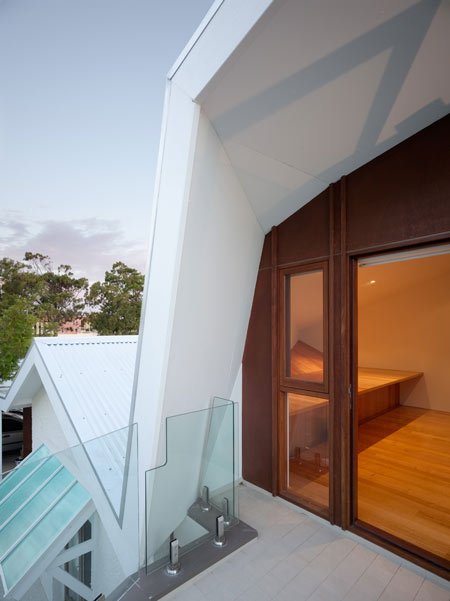
Photography is by Peter Bennetts.
More information from Iredale Pedersen Hook Architects:
--
After 10 years of exploring old residences Swan Street may be viewed as the ‘Swan Song’ of alterations and additions.
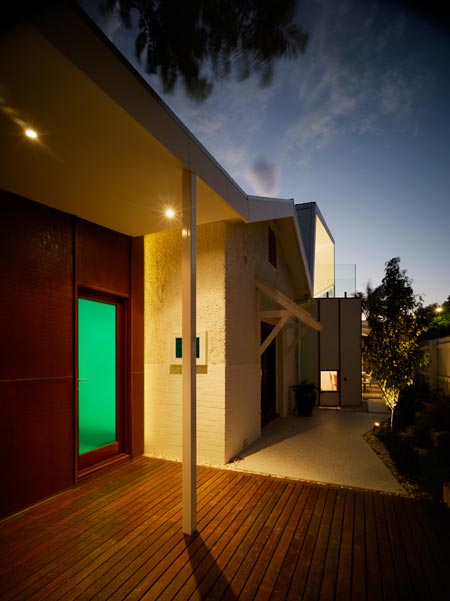
It explores ideas of ‘time’ and ‘context’ through the appropriate use of material and form derived from historical studies dating back to the early arts and crafts houses combined with a careful consideration for how the building may weather and change as a continuing dynamic experience.
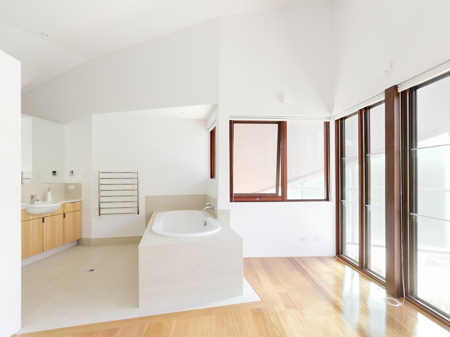
‘Time’ is considered as past, present and an anticipation of future. ‘Time’ is abstracted through the use of green film and polycarbonate, or actively encouraged by the contrasting weathering of timber, or anticipated (slow time) by the oxidising of copper trims.
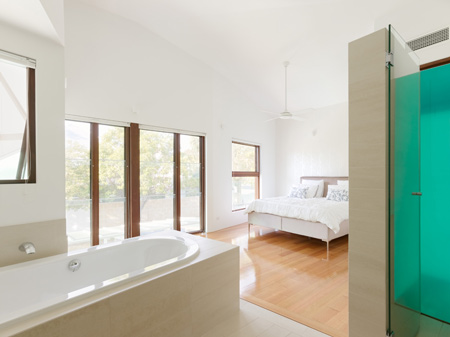
Ultimately the aim of this emphasis on ‘time’ is to re-focus the experience of living in this dwelling away from the contamination and distractions of the ever-increasing electronic world (computers, home theatres…) and to encourage the re-discovery of a few simple every day pleasures. Swan Street is a ‘celebration of time’ in an increasingly active lifestyle where home entertainment systems and computers create unnecessary distractions from re-connecting to the place and time we occupy.
Conceptual Framework
Swan Street explores ideas of ‘time’ and ‘context’ through the appropriate use of material and form derived from historical studies of Perth arts and crafts houses combined with a careful consideration for how the building may weather and change as a continuing dynamic experience. ‘Time’ is considered as past, present and an anticipation of future.
The aim of this is to re-focus the experience of living away from the contamination and distractions of the ever-increasing electronic world and to encourage the re-discovery of a few simple every day pleasures.
Public and Cultural Benefits
Swan Street is a precious addition to the streetscape by keeping the original house and then adding in a manner that treats the original house as the catalyst for the new works. The project developed as a re-action to the original house, discovering and re-interpreting qualities that rarely exist in contemporary housing.
Relationship of Built Form to Context
Swan Street manifests as an exploration of multiple scales of context ranging from the arts and crafts movement in Perth at the turn of the century, the immediate suburb and the specific house. Material, form and detail are re-interpreted to be simultaneously comfortable and intriguing.
Program Resolution
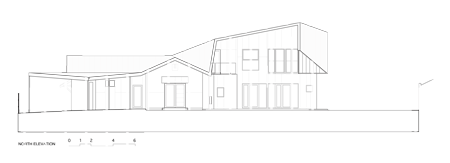
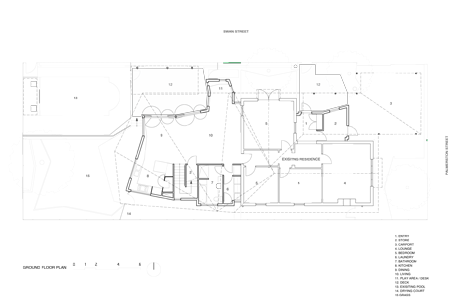
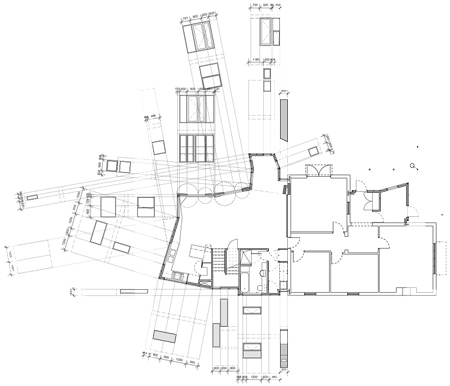
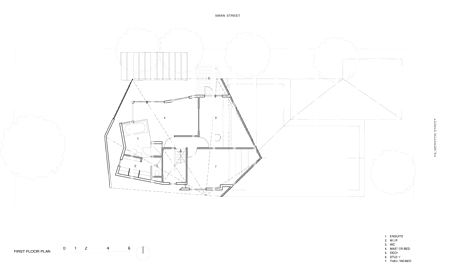
Our brief required a sense of spaciousness with a small site providing safe play areas for children. The original house is transformed into passive spaces and new spaces were purposely kept compact to minimise the footprint and circulation. The ground level folds in plan to connect interior and exterior spaces maintaining a constant dynamic co-existence. The upper level achieves this quality by a large folding section; each part of this section is considered as functional area.
Integration of Allied Disciplines
Our builder is introduced during sketch design to provide cost updates and advice and continues through the entire project eventually providing detail advice during documentation. This provided benefits of cost, quality and efficiency to all parties. Our engineer is also introduced during design development initially in meetings including the builder.
Cost/Value Outcome
The design is complex and time consuming but still cost effective by the working method noted above. Structure and materials were selected based on cost effectiveness and detailing economical by minimising waste.
Sustainability
Sustainability operates at multiple levels, initially by keeping the original house rather than demolishing it and therefore preserving the streetscape. The roof was developed with wide eaves to shade both levels of windows and then folds down as a parasol wall reducing heat loads from the hot west sun while allowing cool south west winds. Walls are constructed from reverse brick veneer with a layer of wool insulation. Timbers are either recycled or from Australian managed forests. Internal walls are painted white to maximise the reflectivity of the surface.
Response to Client and User needs
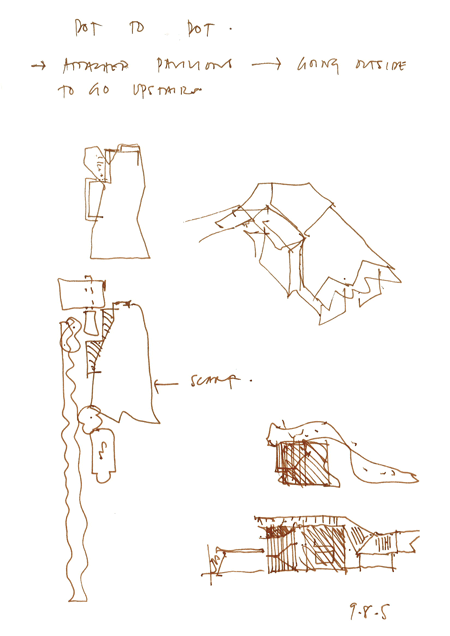
The house has assumed a role in the streetscape that achieves the original intent of being simultaneously thoughtful and provocative. It requires one to have some form of opinion, we believe this is the most important benefit for the community.