CookFox Architects completes Bruce Springsteen Center for American Music
US studio CookFox Architects has unveiled the Bruce Springsteen Center for American Music, which was informed by the musician's "honesty, bravery and authenticity", at a New Jersey university.
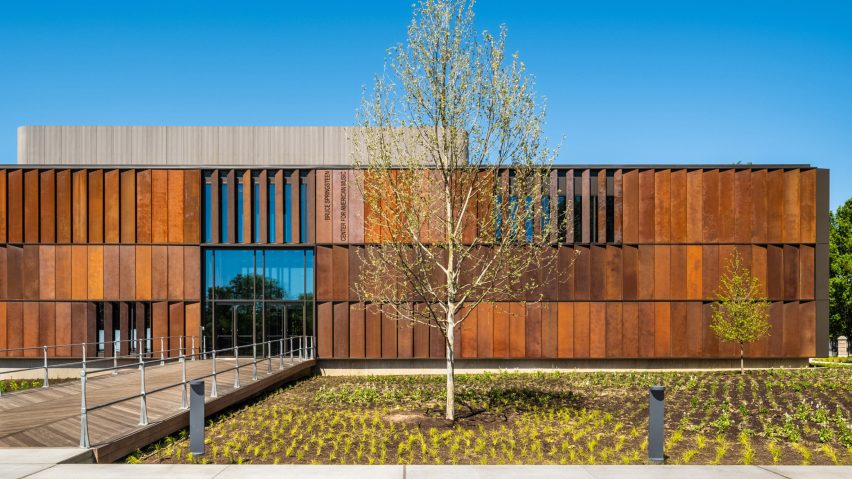
The largely rectangular, 30,000 square-foot (2,790-square-metre) building is located at Monmouth University campus in New Jersey, where the singer performed in early years and where his archives are stored.
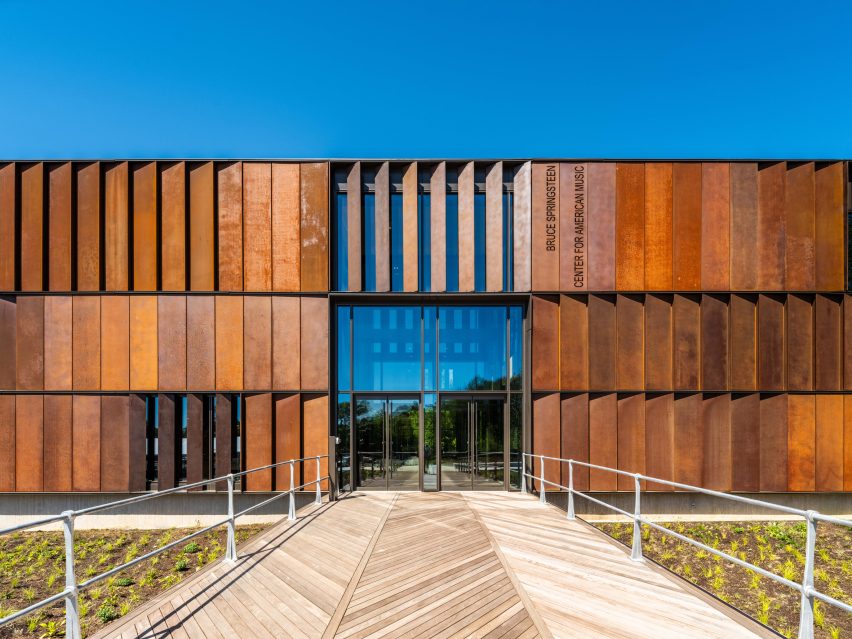
Clad in weathering steel panels and with an unstained, mass-timber structure, the building was informed by singer Bruce Springsteen's music, according to the studio.
"The origin of this project, what drew me in, was a bond I felt with one of our generation's greatest storytellers," said CookFox Architects founding partner Rick Cook.
"That has been a thread through every aspect of the design of the building," he continued.
"As a team we were inspired by Bruce Springsteen's honesty, bravery and authenticity while designing the visitor experience, the form and proportions of the building, its materiality, the phenomenally high-performing auditorium space, and the relationship of the architecture to the exhibits, archives and content."
Springsteen grew up and lives in the state, and he references it frequently throughout his music.
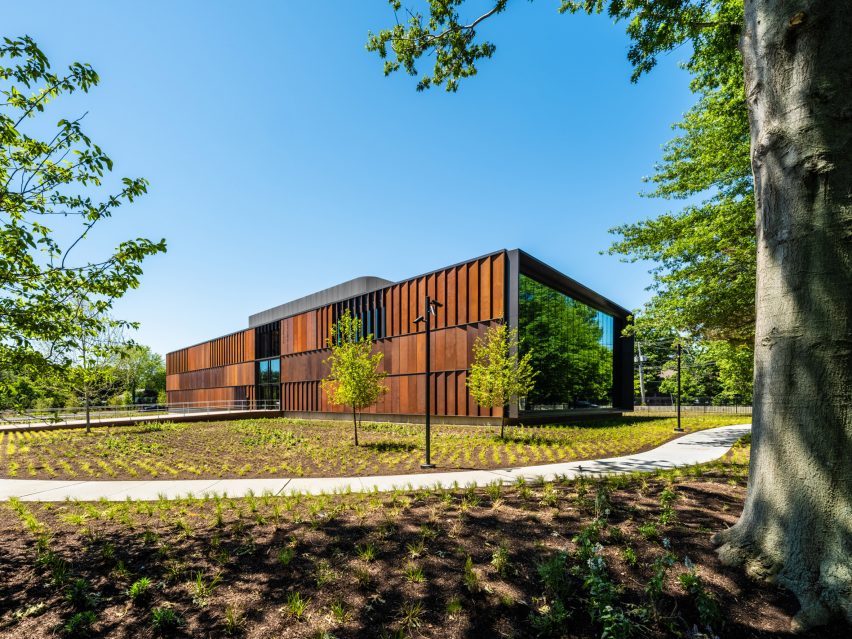
According to the team, the weathering steel panels reference New Jersey's industrial heritage. The building is also surrounded by native New Jersey plantings and a London Plane tree to symbolise a tree that stood outside Springsteen's childhood home.
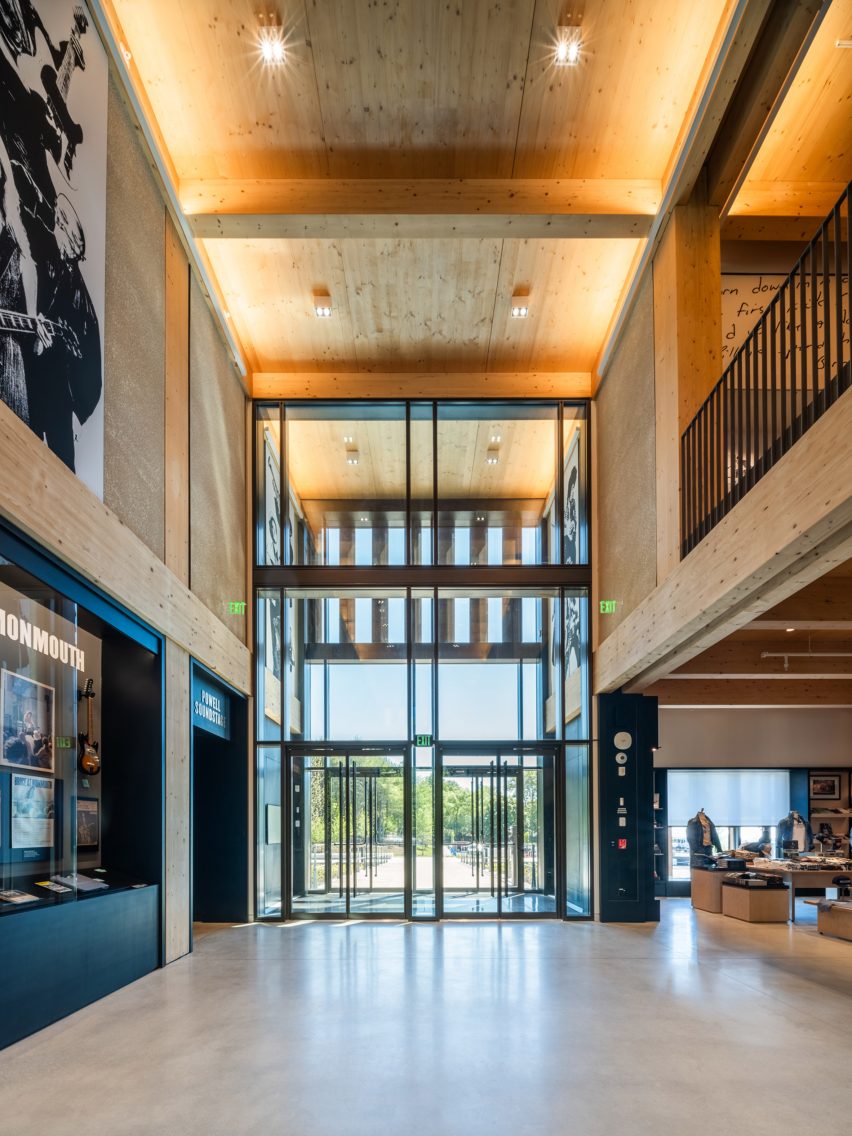
The building is accessed via a boardwalk, which brings people into a large, double-height, central hall, where the mass-timber structure is clearly visible.
The building branches off into the Powell Soundstage performance space to one side, with exhibition spaces on another.
Rectangular windows, some of which are partially concealed by the steel panels, provide light to the interior spaces.
The performance space, however, which takes up one end of the building. is capped by floor-to-ceiling glazing.
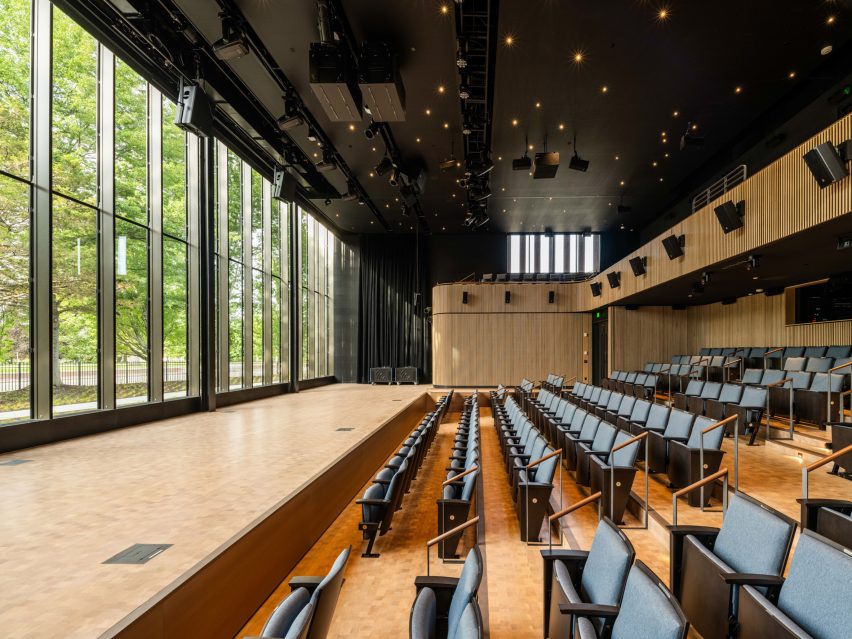
The space was used to screen a short film of Springsteen's life and career for the center's "opening act" during visitor hours, but will also be used for musical performances, lectures, and other video screenings.
Dotted lights in the ceiling reference the nighttime sky of the Jersey Shore, New Jersey's popular stretch of beaches, according to the studio.
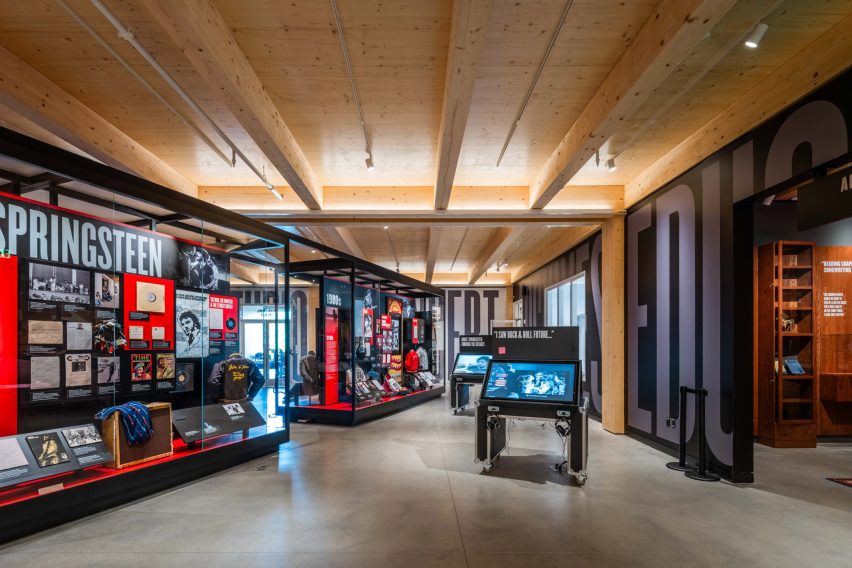
On the other side of the building, three galleries contain exhibitions on the histories and heroes of American music, while Springteen's archive is located on the second floor.
These spaces look down onto the lobby via a mezzanine.
The building is "all electric, net-zero ready" according to the team, and has received LEED Gold certification.
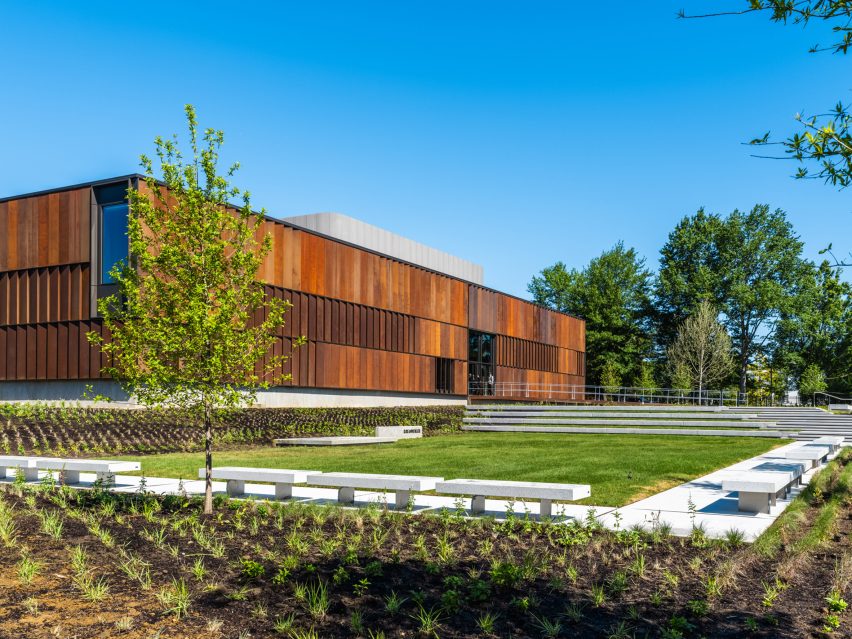
Outside, the landscape designed by LaGuardia Design Group contains bioswales and detention systems to help with stormwater management and also contains a variety of native trees, such as juniper, tupelo, oak, and maple.
"I am enormously proud that our work will help to tell the story of American music," concluded Cook.
Elsewhere, the studio recently completed a tiered extension to a New York skyscraper and also completed a building along the Williamsburg waterfront.
The photography is by Alex Ferrec
Project credits:
Owner: Monmouth University
Architect: CookFox Architects
Client: Bruce Springsteen Center for American Music
General contractor: Torcon
Owner's project manager: Pure Project Management
Weathering steel: Dissimilar Metal Design
Mass timber: Timberlab
Mechanical engineer: Dagher Engineering
Structural engineer & facade consultant: DeSimone Consulting Engineering
Civil engineer: Langan
Geo-technical engineer: French & Parrello Associates
Landscape architect: LaGuardia Design Group
Exhibition & signage designer: C&G
Lighting consultant: ONELux
Code consultant: Design2147
Acoustic consultant: Longman Lindsey now Trinity Consultants
Security consultant: Dagher Engineering
Theater consultant: Harvey Marshall Berling Associates
Specification consultant: Long Green Specs
Accessibility consultant: KMA Architecture + Accessibility